
Case Study: New Solo Doctor
In-home Euthanasia Practice in a Small City
Many new practices worry about their expected growth and struggle to conceptualize what’s possible given their practice size or service area population. It can be difficult to know what to expect when opening a new practice and to plan when/how to find phone support assistance. The following case study outlines a real practice’s journey during it’s first two years.

Establishment
In 2019, an in-home euthanasia practice was founded in a mid-sized midwestern city with a service-area population of about 250,000. The veterinarian had spent years working in general practice and wanted to try a new way of practicing medicine, one that would allow for slower, more connected patient and client care. With a passion for hospice and euthanasia, this doctor knew she wanted to provide end-of-life veterinary services in an under-served city.
Growth Journey
This practice began as a solo-veterinarian practice, and the doctor’s monthly appointment goal was 30 visits/month. DVMcenter began managing phone support from day one, which included phone answering, email management, Buddy software scheduling, online visit request forms and social media.
In this case, the doctor was not managing their own client communication, so they had time to dedicate to business development and marketing strategies. Their marketing was focused primarily on in-person visits to local clinics, Google Ads and online presence, and encouraging word-of-mouth referrals through high-quality, high-touch client care.
Metrics
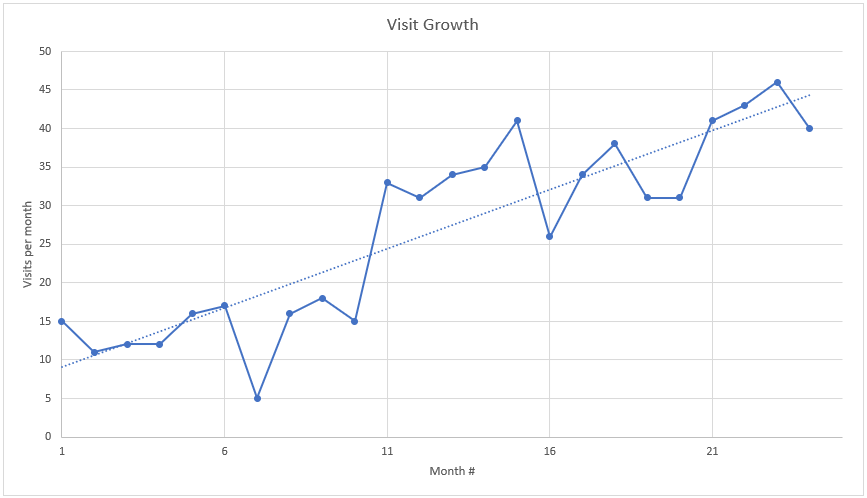
It took 10 months to reach the goal of 30 visits per month.
Within 15 months, this practice exceeded its monthly visit goal by 27%.
This growth chart illustrates that while month-to-month growth was erratic at times, the overall trend was strong. Month-to-month variations in growth are common and may be contributed to seasonality, holiday weekends, provider schedule/vacations, competitor availability, and other yet-to-be understood reasons.
This practice held steady with visit availability with a goal of 50-70% fill rate, meaning that 50-70% of availability visits were scheduled. Once the fill rate reached or exceed 70%, the doctor would increase the number of visits available. If the fill rate was below 50%, additional marketing strategies were implemented.
Two years after this practice was founded, the doctor is averaging a 75% fill rate and is now looking to hire a second part-time doctor.